Home / Youth enterprise
Youth enterprise days and programmes
Students find a real problem, plan a business around it, build a first version and pitch it. Four formats, from a half day to a full programme, for schools, colleges and youth groups across the UK.
- Primary school to college
- Up to 30 students per booking
- UK-wide
- DBS checked
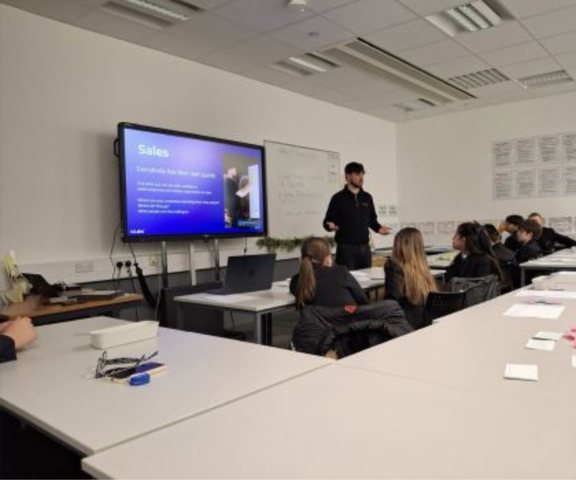
Enterprise half day
The core of an enterprise day, condensed. A good first taste of enterprise, or a fit for a timetable that can't give up a full day.
How it runs
- Find a real problemTeams pick something that genuinely annoys people they know.
- Business basicsWho the customer is, what they'd pay and how it makes money.
- Plan on one pageName, problem, solution, customer and a one-sentence pitch.
- PitchEach team pitches to the room.
Students leave with
- A one-page business plan to keep working on
- Experience pitching to a room
Enterprise day
About six hours, from a real problem to a business that's planned, built and pitched before home time.
How it runs
- Teams and an icebreakerStudents are split into teams of four or five, then warm up with a quick game built around fake business ideas.
- What running a business is really likeAn honest talk, mistakes and boring bits included.
- The problem huntWho has the problem, what exactly annoys them, how they cope now and why nobody has fixed it.
- Sales, branding, finance and productShort, hands-on blocks, each applied to their own idea.
- Test the idea out loudTeams pitch a rough concept to each other and name one honest worry about it.
- Plan on one page and buildThe business goes on one page, then teams brief or build a first version, from a landing page to a simple prototype.
- PitchTwo minutes per team, judged on problem clarity, creativity, teamwork and confidence.
- The revealOne team's idea is picked, and their business goes live as a real website, built in the room from the brief they wrote, before anyone leaves.
For teachers: the reveal works best as a surprise, so please don't mention it to students before the day.
Students leave with
- A one-page business plan to keep working on
- A first version of their idea
- Feedback on their pitch
Young founders accelerator
Two to three days that take students from first ideas through to confident pitching and business readiness, finishing in front of guest founders and judges.
Younger groups can run a version that focuses more on building skills than on the full business plan.
How it runs
- Day 1: problems and ideasFind real problems and generate ideas to solve them.
- Day 1: pick an idea and research the customerChoose the strongest idea and find out who would actually pay.
- Day 2: sales, branding, finance and productEach one worked through on their own business.
- Day 2: plan and buildWrite the business plan and build a first version.
- Final day: pitch coachingPractise, get feedback and tighten the pitch.
- Final day: the pitchTeams pitch to guest founders and judges and answer their questions.
Students leave with
- A full business plan to keep
- A certificate for every student
- Experience pitching to real founders and judges
Multi-week programme
The same journey spread over regular sessions, so ideas have time to develop between them. Built around your group and the time your timetable allows.
A typical shape
- Problems and ideas
- Customers and sales
- Money and planning
- Build a first version
- Pitch event
Session length, how often they run and the number of sessions are all set to fit your group and your school's preferences.
Students leave with
- A business plan to keep working on
- A first version of their idea
- A final pitch to an audience
What every format has in common
The length changes. The approach doesn't. The delivery is pitched to each age group, from primary school to the end of college.
Start with a problem, not an idea
Small and specific beats big and vague. Every team works through the same four questions.
- Who has this problem?
- What annoys them about it, exactly?
- How do they deal with it now?
- Why hasn't someone fixed it already?
Teams of four or five
Set at the start, so every group task is done together and nobody sits it out.
Ideas get tested out loud
Teams pitch rough ideas to each other early and name one honest worry about their own, before they commit.
One page, one sentence
The business fits on one page: name, problem, solution, who it's for, how it makes money, and a one-sentence pitch.
Pitches are judged on
How booking works
- 1Free introduction callHow it works and what would suit your group. No strings attached.
- 2Planning callA more detailed call to go through the structure for your specific group.
- 3The sessionDelivered in your school, college or youth setting. Teachers are welcome to sit in on the pitches.
- 4Students take it homeEvery student leaves with a business plan they can keep working on.
What the school provides
- A room, ideally with wifi
- A projector or screen
- Laptops or tablets if you have them. They help but aren't essential.
What the price covers
- A group of up to 30 students. Larger groups are quoted.
- No VAT to add
- Travel agreed in the final quote
Questions schools ask
Can primary schools book?
Yes. Half days, full days and multi-week programmes run for every age from primary school to the end of college, with the delivery pitched to each age group. The accelerator works best from Year 9 up, with a more skills-focused version for younger groups.
Do students need laptops or tablets?
No. Ideally the school provides a room with wifi and a projector. Laptops or tablets help but are not essential.
What happens before the session?
First a free introduction call with no strings attached, to explain how it works. Then a more detailed call to go through the structure for your specific group.
What do students take away?
Every student leaves with a business plan they can keep working on. Accelerator students also get a certificate.
Can teachers watch?
Yes. Teachers are welcome to sit in on the pitches.
How many students can take part?
Prices cover a group of up to 30 students. Larger groups are quoted. No VAT is added, and travel is agreed in the final quote.
Is Michael DBS checked?
Yes. Michael is DBS checked for work in schools, colleges and youth settings.
Plan a session for your group
Pick a format and a few options in the brief. It takes under a minute, and you get a reply within one working day.